Centralize processes, connect tools and follow every stage of the work. Inky builds custom software around your company's routine, with a defined scope and delivery in stages.
Tell us which process you need to organize and what you use today. That is our first conversation.
When it makes sense
When the process calls for its own system
Your team knows the work. The effort shows up when it is time to gather information, check what is pending and move one stage on to the next. Custom software can make sense when these difficulties keep repeating across the operation.
The same information has to be typed in several times
A record is entered by sales, filled in again by finance and ends up in a spreadsheet. Connecting these stages keeps the data consistent and cuts down on manual checks.
Knowing the status means asking someone
To find out what is missing, who is responsible or what comes next, the team has to dig through messages and files. A workflow with status, history and owners makes this follow-up clearer.
The company's rules were left outside the tools
Approvals, calculations, documents or specific permissions end up handled through parallel controls. Custom development makes it possible to build these rules into the work process.
What we build
The system starts with what most needs to work better
We define the solution from the priority problem, the people involved and the tools that are already part of the operation.
Operations management
Organize orders, projects, documents, tasks and approvals in a workflow the team can follow. Each stage can bring together the data, deadlines and owners the work needs to move forward.
CRM and sales processes
Track contacts, proposals, negotiations and the handoff to operations. Stages and rules are defined around the way the company works, with a history that keeps the service continuous.
Let each person follow requests, send documents and look up information in their own area, with access defined by role.
Integrations and automation
Connect the tools that need to exchange information and automate repetitive tasks. Before proposing a system replacement, we assess what can be kept and integrated.
99.8% Error-free requests in projects in production
2,400+ Leads per day processed with no drops or slowdowns
Case studies
Systems in practice
Port agency · 2025
Management for a port agency
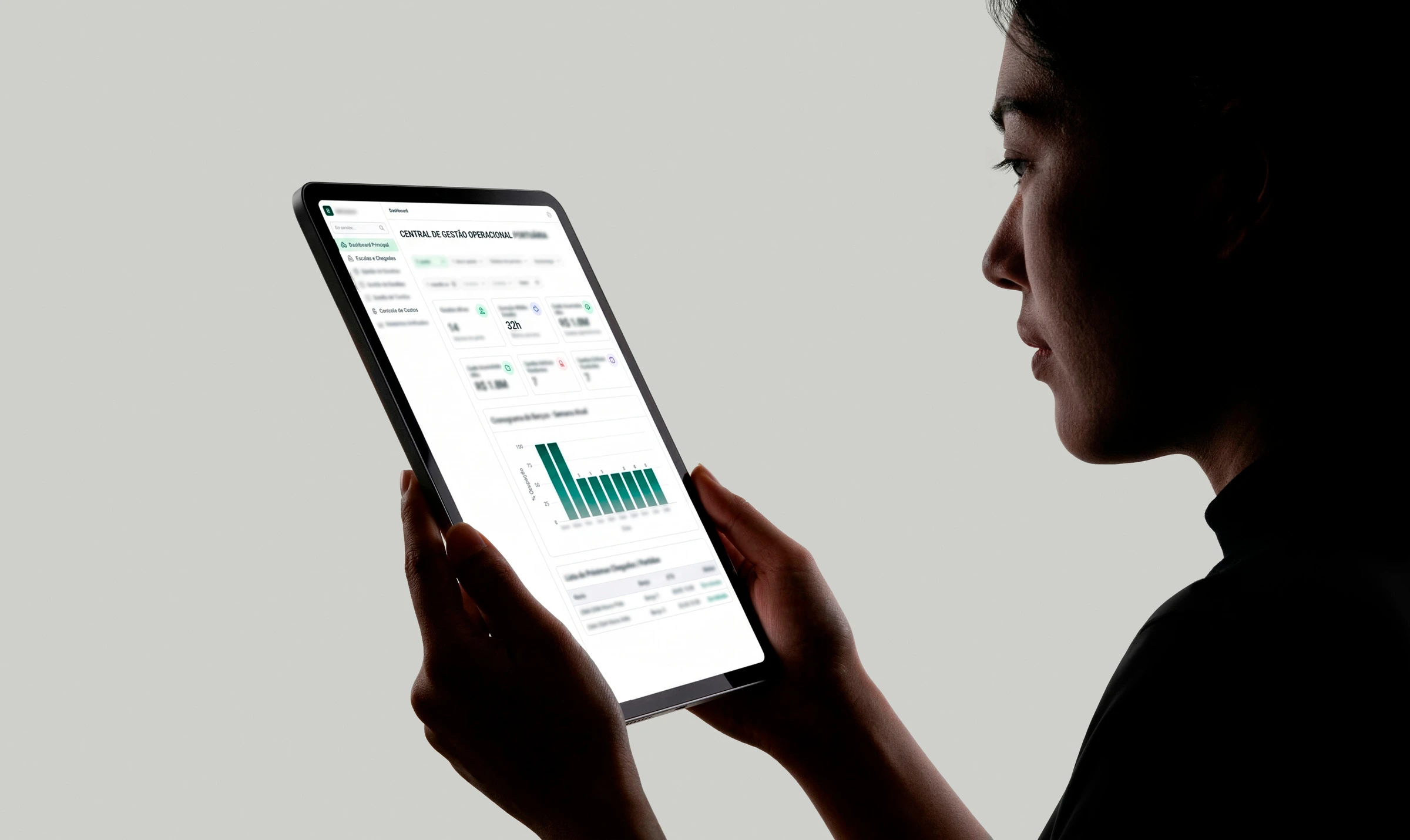
Port calls, tasks and indicators were tracked in separate tools. The system brought the operation's records, the team's pending items and the costs of each port call into a single base. The indicators now follow the data recorded in the workflow itself.
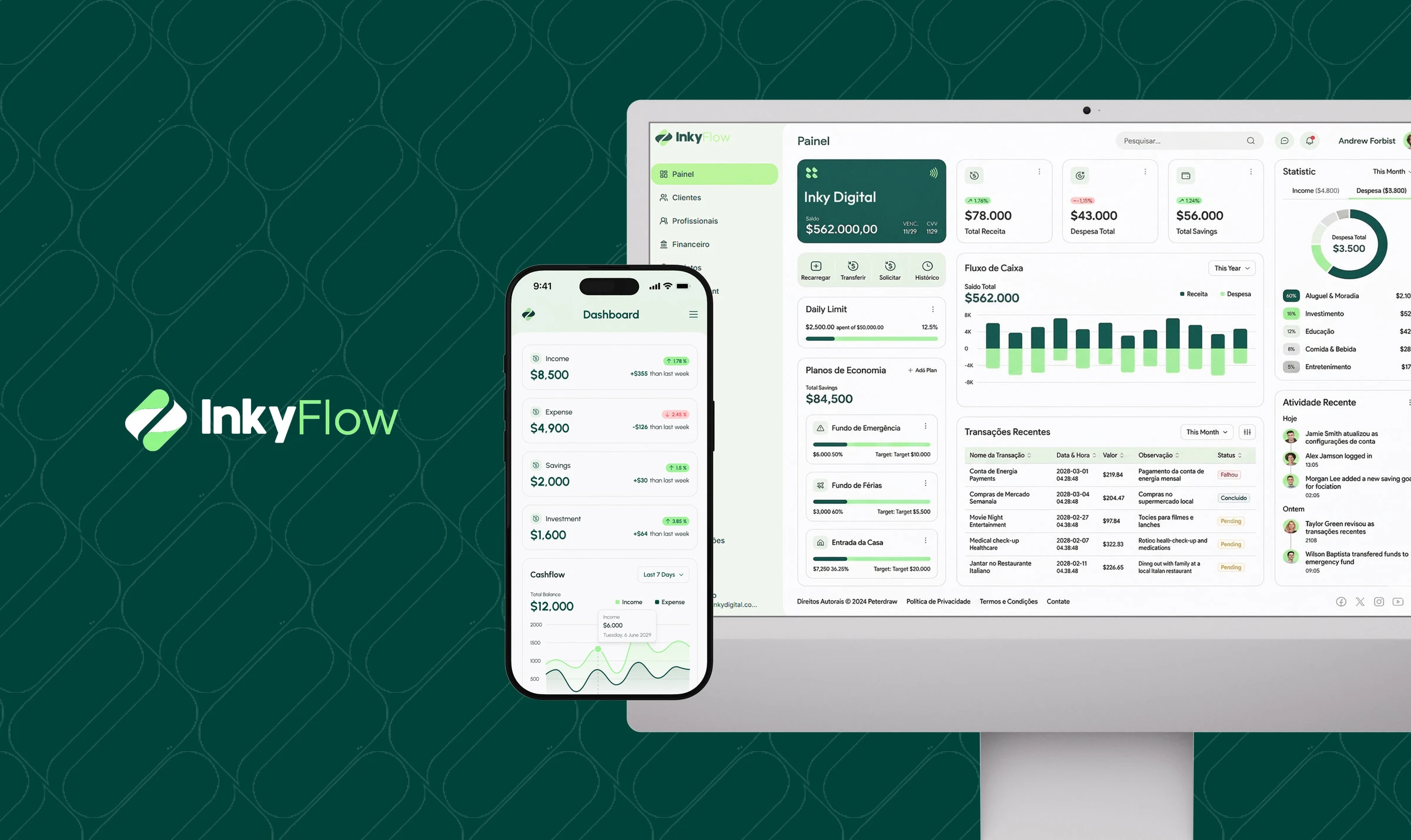
Clients, projects, partners, tasks and finance are part of our routine. We built InkyFlow to connect this information: each project brings together deliverables, owners, deadlines and costs, with access based on each person's role.
We assess whether a system is really the best path
A custom project is a significant investment. In the first conversation, we check whether it is justified or whether there is a simpler alternative for your case.
It makes sense when
The process is specific to the company and off-the-shelf tools need constant workarounds.
More than one department depends on the same information to work.
The cost of keeping parallel controls already shows up as delays, rework or errors.
Another path may be better when
Off-the-shelf software fits the process without major adjustments. In that case, we recommend that path.
The problem is passing data between systems that work well. An integration usually solves it with a smaller investment.
The process is not defined yet. It is worth stabilizing the workflow before turning it into a system.
Process
How we build your system
01
We understand the operation
We talk to the people who decide and the people who carry out the process. We map the stages, current tools, waiting points and what needs to change for the first delivery to be useful.
02
We define the first stage
We organize priorities and set the scope. The proposal presents deliverables, responsibilities, dependencies, investment and the criteria for evaluating what was built.
03
We build and validate with your team
We design the screens and workflows, develop the features and validate each delivery with the people who will use the system. Decisions follow the process agreed for the project.
04
We prepare for use and continuity
Going live covers access, data, usage guidance and the agreed support terms. New needs can be assessed in evolution stages with their own scope.
Team
A team organized around your project
Inky brings together the professionals each delivery requires, with leadership in discovering the problem, designing the solution and following the project through.
You know what is being built, which decisions need your team and how each stage will be validated. The proposal and the scope set out these responsibilities from the start.
Frequently asked questions
Questions before hiring
When is it worth building custom software?
When the company has a significant process that current tools do not serve well, and the cost of keeping parallel controls justifies the investment. We assess the problem, its frequency, the people involved and the alternatives before defining the solution.
Do I need to replace the systems I already use?
That depends on the problem. In many projects, the work involves an integration or a specific feature around the existing system. Feasibility depends on the integration capabilities, permissions and terms of each tool.
Can we start with one part of the operation?
Yes. We can define a first stage with a clear scope, as long as it makes sense within the full process. Other features are planned according to the priorities and dependencies of the project.
How much does custom software cost and how long does it take?
Investment and timeline depend on the workflows, access profiles, integrations, data and features involved. Once we understand the need, we define the next steps toward a responsible scope and estimate. More complex projects may require a dedicated diagnosis stage.
What happens after the system goes live?
Fix, support and maintenance terms are defined in the contract. Evolution can include new features and integrations, with priorities, scope and investment agreed for each stage.
What about data, access and documentation?
These points are part of the project definition. The scope and contract set out the deliverables, documentation, access and rights involved. Permissions inside the system are designed around the roles and needs of the operation.
Contact us
From your message to a proposal, in three steps.
01
A reply within 24 business hours
A specialist reads your message and replies to the email you provided. Business hours in Brasília time (UTC−3).
02
Discovery call
We understand the operation, the systems it already uses and what needs to change.
03
Proposal with scope
Within 2 business days of the conversation, you receive the scope, timeline and investment.
Tell us how it works today, where the team loses time and which tools you already use. We will understand the need and assess a first stage for your system.